
Calculation Process
Multi-Energy Flow Calculation is an essential analytical method in IES, which determines unknown nodal state variables by applying power flow models to the system's limited known parameters.
Multi-energy flow calculation is a key technology for determining the operational states of nodes and branches in integrated energy systems. The Newton-Raphson method, as an efficient iterative solution algorithm, achieves rapid convergence to feasible solutions through successive linearization of nonlinear equations, and is widely applied in multi-energy flow calculations.
The decoupled solution method alternately solves each sub-network within the integrated energy system, simplifying computation and improving efficiency. In this system, the heating and cooling networks are treated as pure loads, with their energy flow requirements determined first. The electrical and gas networks are then solved after the thermal networks, as they function both as loads and energy suppliers, requiring more complex energy exchange and state variable corrections.
Calculation Results
Using system operational data from 02-06 14:00 in the conventional dataset as input, the solved results for unknown node and line variables are as follows:
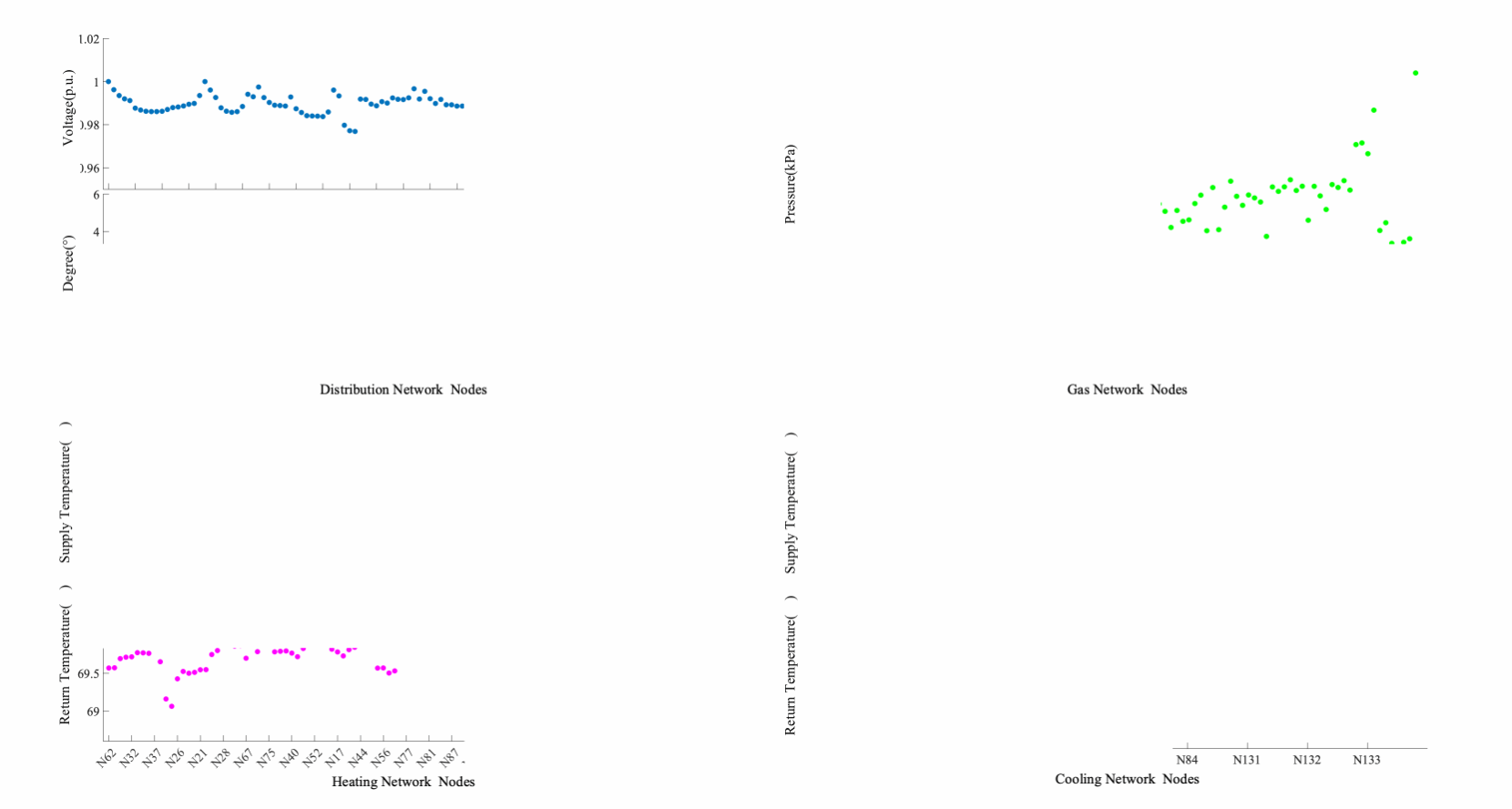
Multi-Energy Flow Calculation Results for IES-134 System Node Parameters
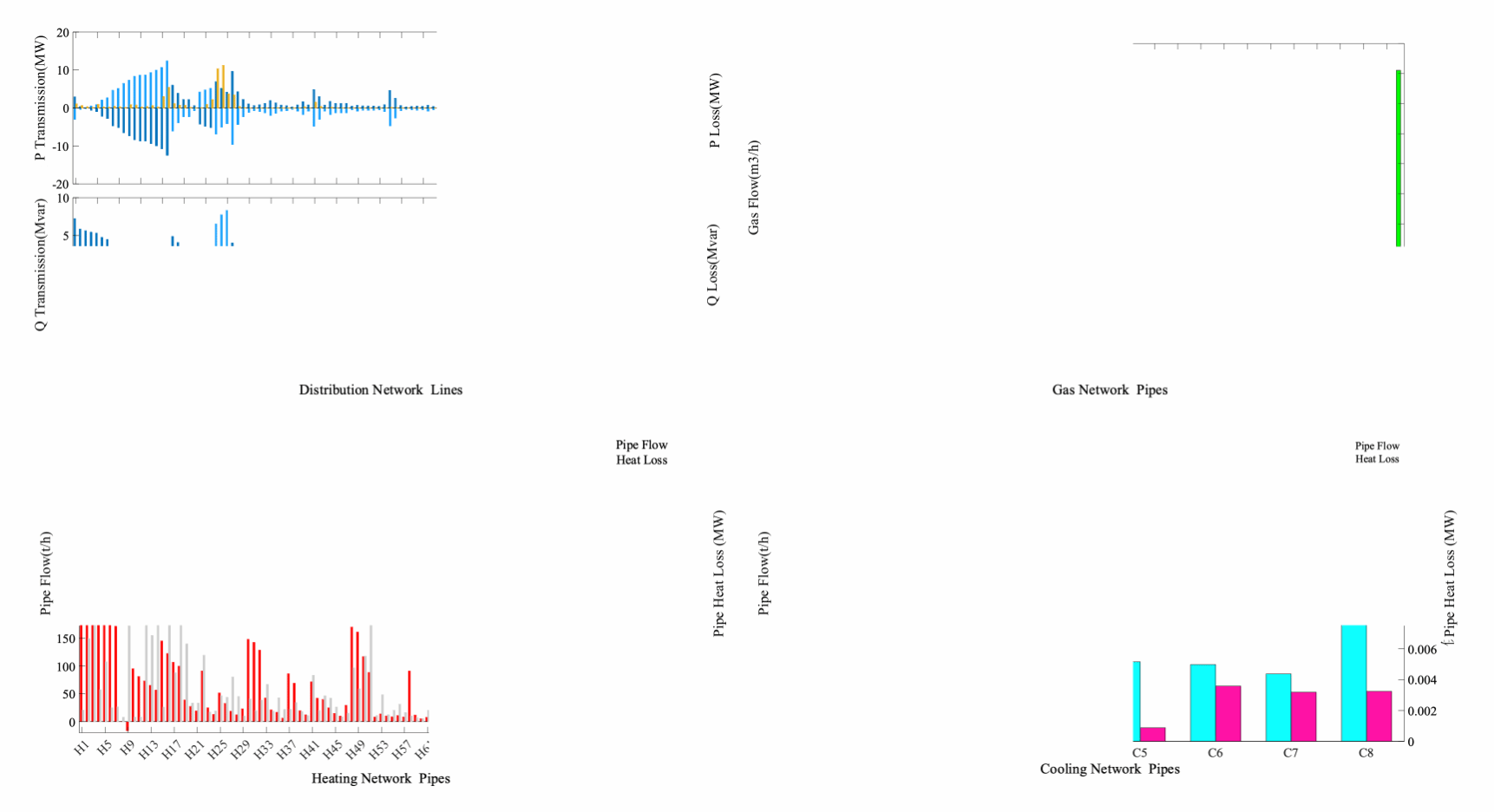
Multi-Energy Flow Calculation Results for IES-134 Pipeline Power Transmission
The results indicate that all nodal parameters remain within specified limits, with power losses below 5%, meeting the system design requirements.
Visits:524811
Downloads: 52602
Data Submissions: 9274