
Optimization Method
A bi-level optimization model is established for the economic dispatch of the IES-134 system. The upper level aims to maximize system operational revenue, while the lower level seeks to minimize user energy consumption costs. The model considers constraints including equipment output limits and supply-demand power balance, while incorporating time-of-use energy pricing and load demand response factors. Game-theoretic optimization methods are employed to achieve economically optimal scheduling.
Optimization Results
The optimization results using the 02-06 dataset from the conventional dataset as inputs are presented below:
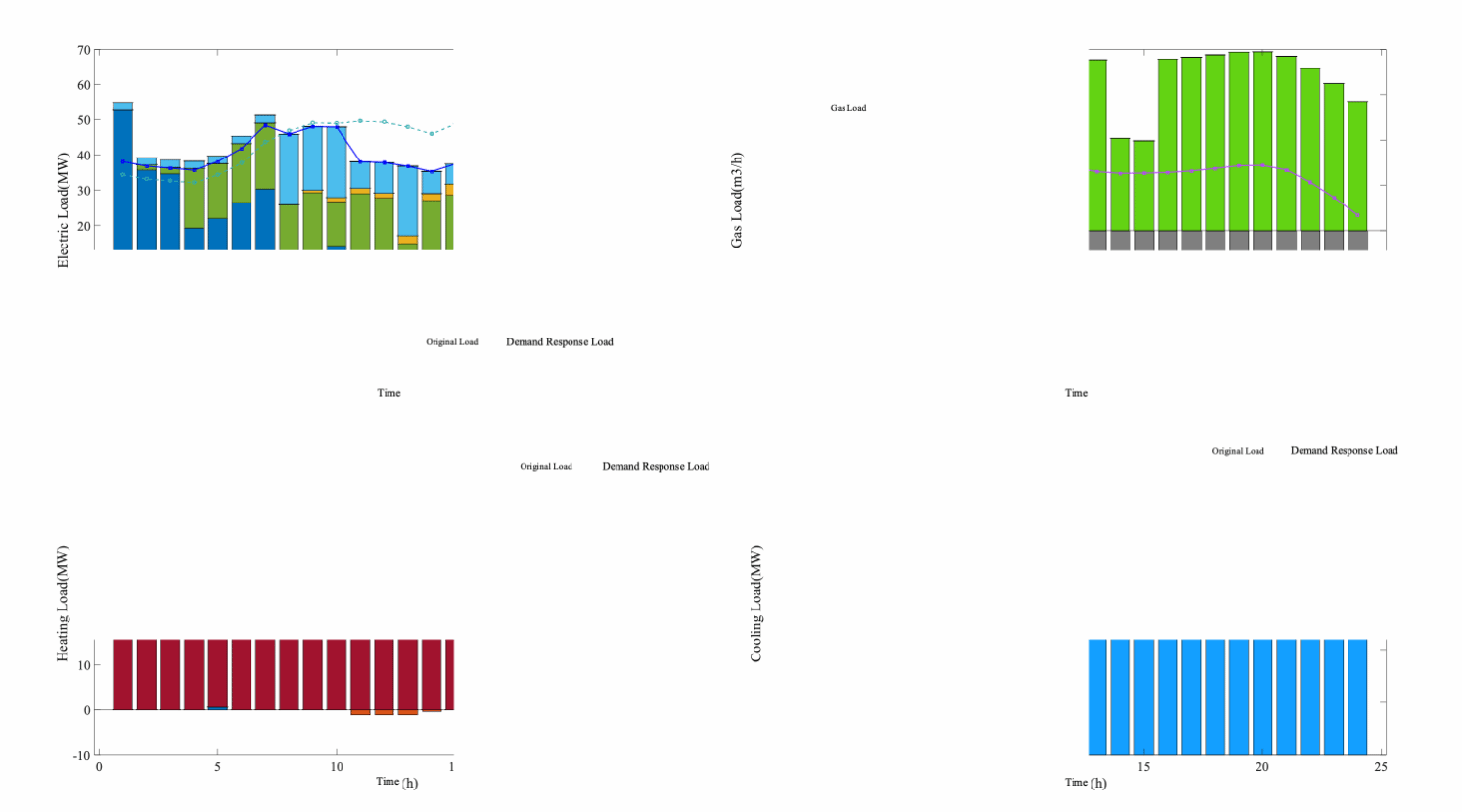
Economic-Optimal Dispatch Results of IES-134 System
The computational results demonstrate that when demand response is considered, the energy storage unit effectively mitigates load fluctuations by leveraging its regulation capability, achieving peak shaving and valley filling. Meanwhile, coupling equipment such as electric boilers, gas boilers, and electric chillers optimize their operation during periods of lower time-of-use energy prices, thereby further reducing the system's energy consumption costs.
Visits:524811
Downloads: 52602
Data Submissions: 9274